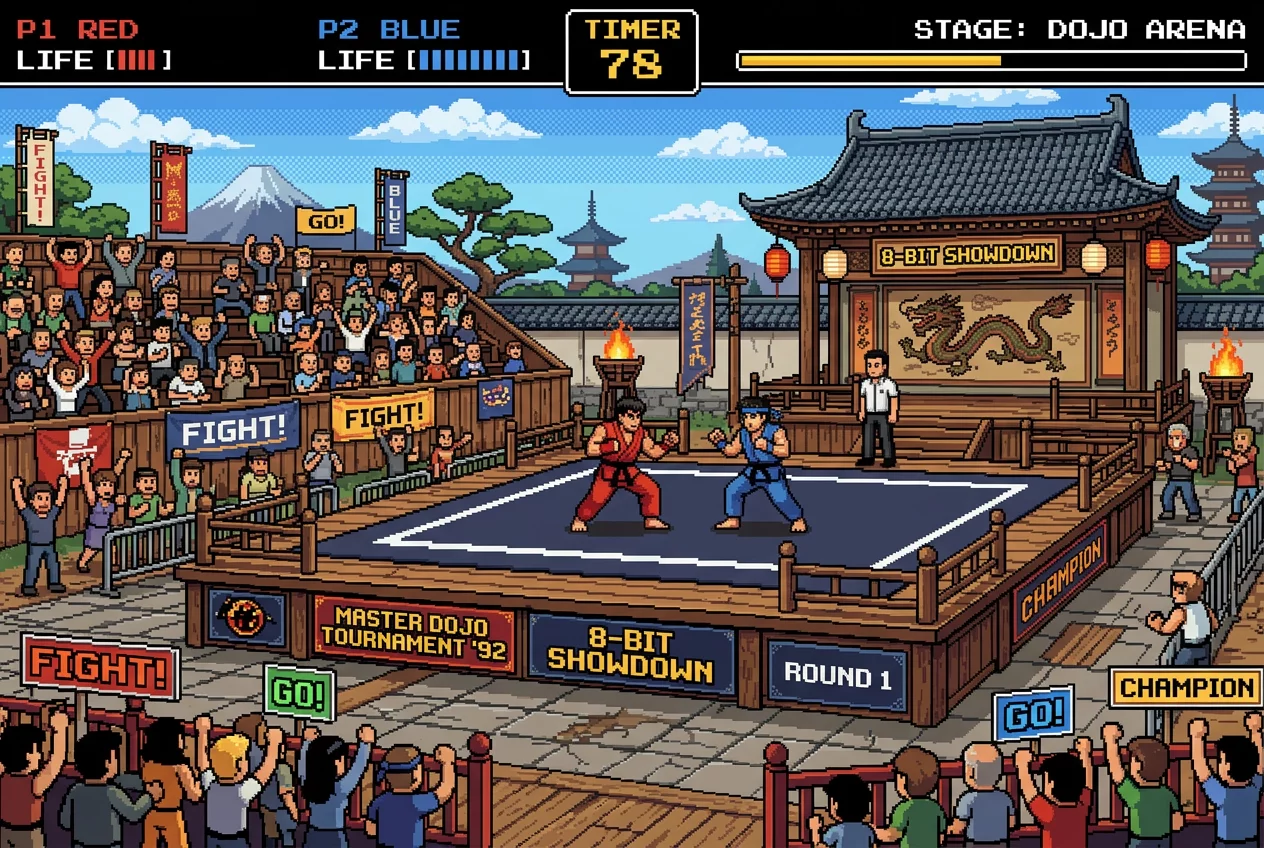
Stepping back into the world of 8-bit and 16-bit fighters feels like entering a smoky arcade where the neon lights flickered and the challenge of facing a local champion was the ultimate test. These digital arenas weren't just about winning; they were about the atmosphere of the urban street, the mystical temple, and the crowded tournament grounds. Every pixel on the screen carried the weight of the competition, creating a landscape that felt alive despite its technical limitations. Whether you played on a Dendy or a Sega, the sensation was always the same: a mix of intense focus and pure adrenaline.
The Atmosphere of the Pixel Dojo
The visual style of these classics remains unmatched in its ability to evoke a specific era of gaming history. Heavy contrast between the characters and the vibrant, often moving backgrounds allowed players to lose themselves in the moment. You could almost smell the digital rain in a city stage or feel the heat of a desert wasteland. This level of immersion was the real crown of the genre, making every encounter feel like a scene from a legendary martial arts film. Even online enthusiasts today look back at these static frames and find more soul than in many modern high-definition releases.
Voices from the Ring
The sound design of retro fighters was another cornerstone of their legacy. Those crunching impact sounds and synthesized voices announcing the start of a match became the soundtrack of a generation. They weren't just noises; they were cues that signaled a turning point in a battle. The music, often fast-paced and rhythmic, kept the heart racing during the final seconds of a round. It is this sensory combination that makes these legends survive in our memories long after the consoles have been boxed away. They represent a time of exploration and raw creative energy that defined the fighting foundations for decades to come.
"There is something uniquely honest about a three-round battle where the only thing between you and defeat is your timing and a flickering television screen."
A Lasting Impact
Looking back at these titles, it becomes clear that they were much more than simple software. They were social hubs, common grounds for friends to settle disputes, and portals to worlds where anyone could be a master. The simplicity of the layout hides a depth of emotion that modern gaming often struggles to replicate. When we talk about retro fighting legends, we are talking about the very heart of why we started playing games in the first place: the thrill of the contest and the respect for the opponent.
Community Thoughts
No comments yet. Be the first to leave a comment.
Leave a Comment