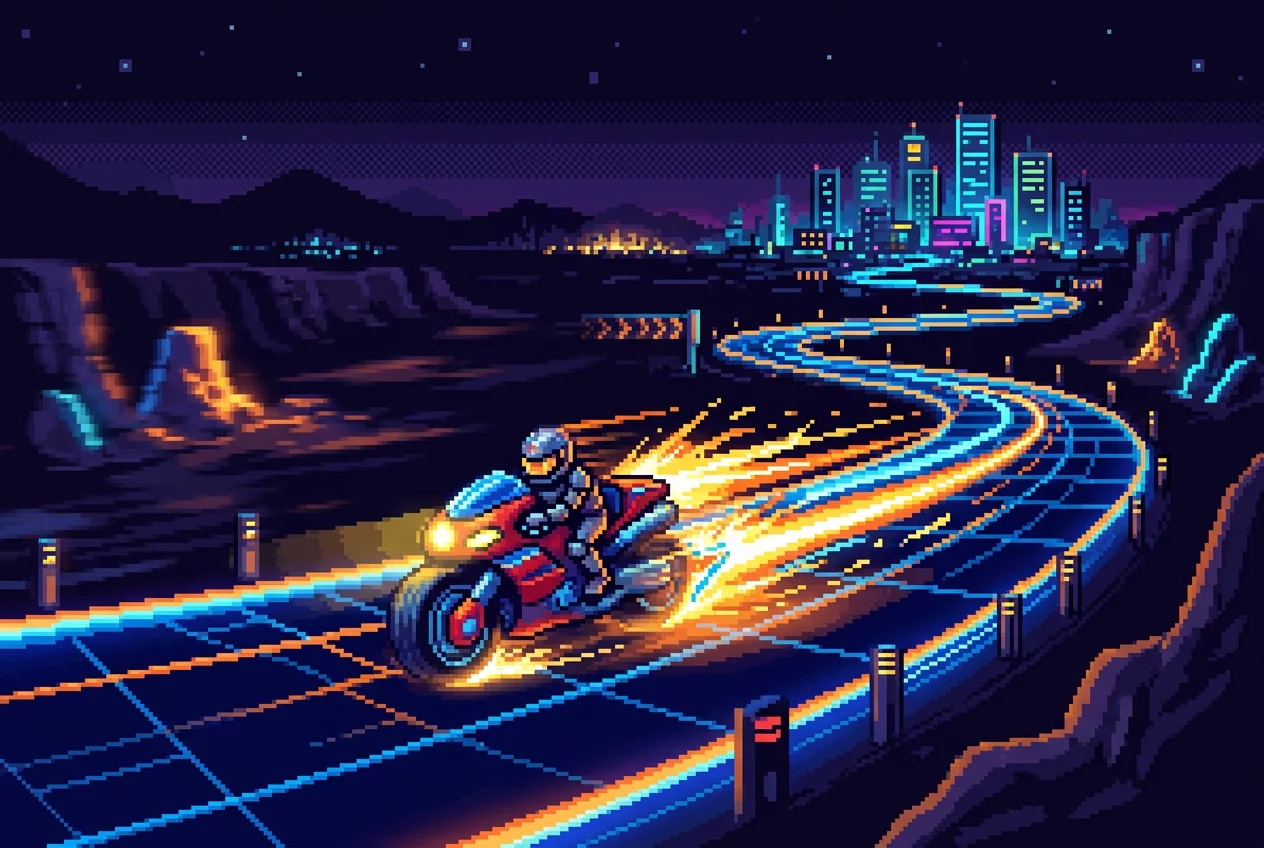
There is a unique kind of electricity that flows through your thumbs when a pixelated car hits a hidden turbo strip. In the golden era of Dendy and Sega, speed wasn't just a number on the screen; it was a visceral shift in reality. The background would suddenly smear into a rhythmic blur of horizontal lines, the music would pitch up, and for a few fleeting seconds, the game felt like it was barely holding together under the sheer force of its own momentum.
The Pure Joy of Found Acceleration
For many of us, finding a hidden turbo pad felt like uncovering a secret pact between the player and the hardware. Those moments when the engine sound transformed into a high-pitched whine were the highlights of every race. It was about more than just crossing the finish line first; it was about that crown of satisfaction you felt when your timing was so precise that you stayed at top velocity for the entire lap. We didn't need online leaderboards to know we had achieved something legendary in our own living rooms.
Visual Language of the 16-Bit Trails
As systems evolved, so did the representation of speed. The introduction of glowing trails and flickering sprites provided a visual reward for staying focused during the most intense segments. Watching these colorful echoes follow your character created an immersive bubble, making us forget the simple logic of the code. It was an aesthetic of pure motion that still resonates with every retro fan today. These visual cues became the signature of a high-performance run, transforming a simple race into a breathtaking display of digital art.
Even decades later, the memory of that sudden kick in the back—the digital equivalent of a nitro boost—remains vivid. It serves as a reminder that the best gaming experiences aren't always about the most realistic physics, but about how a game makes you feel when the pixels finally catch fire.
Community Thoughts
Ken
18/04/2026Gotta go fast.
Leave a Comment